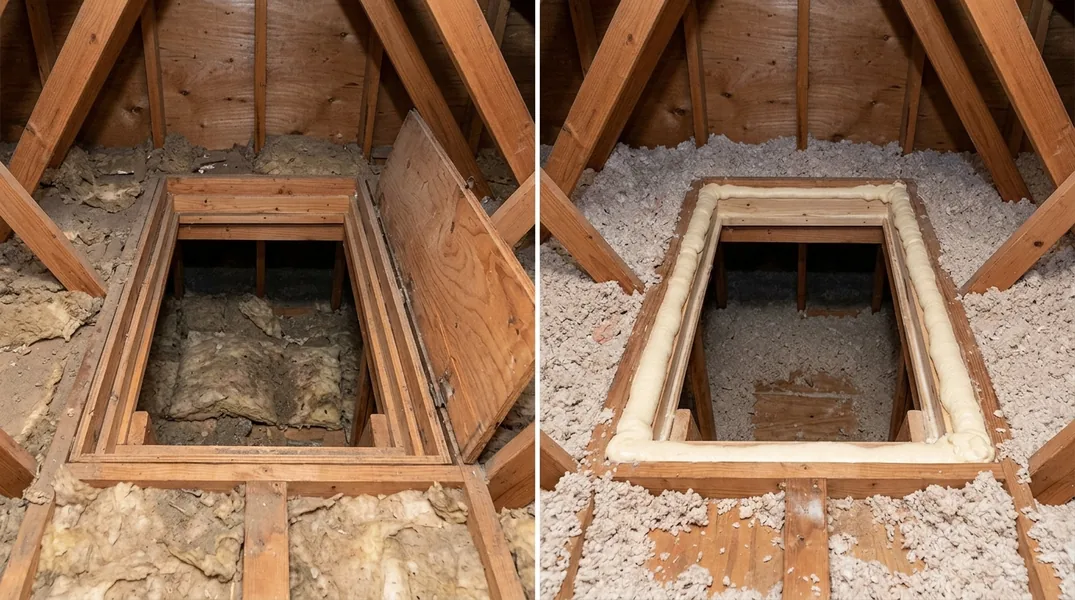
Understanding Waco's Humid Climate and Vented Attic Problems
Central Texas experiences a subtropical climate with high humidity levels, particularly during spring and summer months. Waco homeowners often struggle with moisture management in their attics, especially those with traditional vented designs. When outdoor air contains excess moisture, it naturally seeks equilibrium with indoor spaces, and vented attics become a primary entry point for that humid air.
Traditional vented attics were designed with the assumption that air circulation would prevent moisture buildup. However, this approach fails during Waco's humid seasons. As warm, moist air from your living spaces rises and encounters the cooler attic environment, condensation forms on rafters, insulation, and structural components. This cycle repeats daily, creating an environment where mold thrives and wood rot accelerates, ultimately compromising your home's structural integrity and air quality.
The Science Behind Inward Humidity Drive in Vented Attics
Humidity doesn't simply float randomly through your attic. Instead, it follows predictable patterns based on temperature differentials and pressure dynamics. During cooler months, the attic becomes significantly colder than the interior of your home. This temperature difference creates a pressure gradient that actually pulls humid indoor air upward through wall cavities, around electrical penetrations, and through any gaps in your ceiling. The vented design of traditional attics amplifies this problem because soffit vents and ridge vents allow outdoor humid air to enter directly into the attic space.
When this moist air reaches the cooler attic surfaces, the dew point is crossed, and condensation forms. This isn't a minor inconvenience. The moisture that collects on your roof decking, trusses, and attic insulation creates ideal conditions for mold growth and wood decay. Over time, this moisture can reduce the effectiveness of fiberglass or cellulose insulation by up to 50 percent, meaning your heating and cooling systems work harder while your energy bills climb. The vented attic design, once considered the standard solution, has proven inadequate for Waco's climate.
How Closed Cell Spray Foam Stops Humidity at the Source
Closed Cell Spray Foam Insulation addresses humidity problems in a fundamentally different way than traditional vented attic designs. Rather than relying on ventilation to manage moisture, closed cell foam creates an impermeable barrier that prevents humid air from entering the attic space in the first place. The dense cellular structure of closed cell foam has an extremely low vapor permeability rating, meaning moisture cannot pass through it. This transforms your attic from a moisture-prone vented space into a controlled, conditioned environment.
When you apply closed cell spray foam to your attic roof deck and walls, you're essentially converting your vented attic into an unvented, conditioned space. This approach eliminates the pressure differentials that pull humid air upward. Your attic temperature stays closer to your living space temperature, reducing condensation risk dramatically. Additionally, closed cell foam provides superior insulation value (R-6 to R-7 per inch compared to R-3.5 for fiberglass), which means better temperature control and lower energy costs. For homeowners in Waco dealing with humidity issues, this represents a complete solution rather than a band-aid approach.
Crawl Space and Pier and Beam Insulation: Extended Humidity Control
While attic humidity gets most of the attention, many Waco homes with pier and beam foundations face equally serious moisture challenges below the house. Bellmead and surrounding areas have numerous older homes built on pier and beam systems, and these crawl spaces become collection points for ground moisture. The exposed earth beneath your home continuously releases moisture into the air, and without proper insulation and vapor barriers, this humidity rises into your living spaces, causing cold floors, musty odors, and increased HVAC strain.
Selecting the best insulation for crawl space applications requires understanding that traditional fiberglass batts don't perform well in these damp environments. Crawl space spray foam solutions, particularly closed cell formulations, create a moisture barrier while simultaneously insulating. For crawl space insulation, spray foam can be applied directly to rim joists, band boards, and foundation walls, creating a sealed envelope that prevents ground moisture from entering your home. This approach also solves the cold floors problem that plagues many older homes, as proper pier and beam insulation maintains consistent floor temperatures year-round.
Energy Efficiency and Long-Term Savings with Spray Foam Solutions
The relationship between humidity control and energy efficiency is direct and measurable. When your attic and crawl spaces are properly sealed and insulated with spray foam, your HVAC system no longer fights against moisture-laden air and temperature fluctuations. During Woodway's hot summers, your air conditioning system maintains consistent cooling without the added burden of dehumidifying humid attic air that infiltrates your living spaces. In winter, your heating system works more efficiently because conditioned air stays where it belongs instead of being drawn upward into an uncontrolled vented attic.
Homeowners typically see energy savings of 15 to 30 percent after upgrading from vented attics with traditional insulation to closed cell spray foam systems. These savings compound year after year, easily justifying the initial investment. Beyond energy costs, you're also protecting your home's long-term value. Moisture damage, mold, and wood rot are expensive problems to remediate, often costing thousands of dollars in structural repairs. By investing in proper spray foam insulation now, you're preventing these costly issues before they develop.
Getting Started with Spray Foam Insulation Near Me: Your Next Steps
If you're experiencing humidity problems, cold floors, high energy bills, or musty odors in your Hewitt or Hewitt area home, it's time to explore spray foam solutions. The first step is understanding your home's current insulation situation and identifying where moisture is entering. Every home is different, and a professional assessment can reveal problems you might not see. Waco Spray Foam Insulation offers comprehensive evaluations to determine whether your attic, crawl space, or both need attention.
Don't let humidity continue damaging your home and draining your energy budget. Reach out to Waco Spray Foam Insulation today at (254) 218-4354 or request a free estimate to discuss your specific situation. Our team will explain your options, provide transparent pricing, and answer all your questions about how Attic Spray Foam Insulation and other spray foam solutions can protect your home while reducing your energy costs. Your home deserves better than a vented attic struggling against Central Texas humidity. Let's fix it right.
Looking for a professional spray foam insulation contractor in Waco? Waco Spray Foam Insulation responds fast for all your spray foam insulation needs.
Get a Free Quote